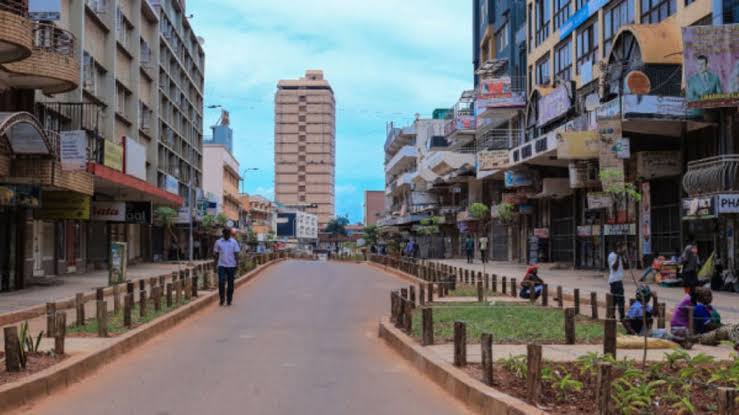
In a space of just one week, Kampala’s streets were cleared of roadside vendors, while the city roads and paths were unclogged during the national cleaning activities, which will be conducted every last Saturday of every month by all people in Uganda.
I never saw this coming, and this is a much-needed ritual the country needed for years.
My props to Prime Minister Robina Nabbanja for the cleaning mobilization, but more effort should be placed on persuasion instead of coercion and forced implementation. In Buganda, Bulungi Bwansi continues to thrive, amidst political undertones, because it creates a sense of belonging and responsibility. A government dialogue with the Katikkiro on the matter can be a game changer.
In Kampala, I feel relieved to see those roadside kiosks and vendors out of the way. They had turned the city’s arteries into markets. So, the KCCA effort was surgery, not sabotage to livelihoods, as some people are parroting. A city must have pavements for people, not stalls for survival.
Nonetheless, let us be honest: you don’t heal a city by cutting off its blood flow. Eliminating the vendors without an alternative form of income is a recipe for disaster.
The same decisive hand that removed the vendors must now touch the boda bodas. Not to break them, but to bring them to order. Because right now, Kampala runs on organized chaos. For instance, it is commonplace to find vehicles fitted with bull bars like armor, not accessories. Our bumpers are deformed. The traffic moves on instinct, not law. We drive looking left, right, and behind simply because the opposite lane is never truly opposite. What an irony!
Honestly, many of you will agree with me that ever since Jennifer Musisi jumped ship as KCCA executive director, this city has been free-range. No central command, no spine, and no shame. What greets you is not the Pearl of Africa but a city shining with thorns.
Let me put this into perspective.
Following the vendor clearance, it created a nose-dive effect we cannot ignore. The chapatti economy that feeds perhaps 70 per cent of the city’s dwellers is in slumber. The young men who once stood from as early as 5 a.m. to 11 p.m. at night, tired from honest work, now loiter the city like headless chickens. Idle hands, hungry stomachs, and now converted thieves. A person who works those long hours cannot be a thug, but the circumstances of inactivity can easily drag them into the vice.
I am also privy to information that producers of chapatti ingredients are bleeding. Consumers are also being priced out.
In short, we cleaned the streets, but we did not plan for the stomach.
So, what must we do to salvage Kampala?
It is not a magic bullet. All it requires is regulating businesses and services. For instance, there is a need to license boda bodas through working zones, hour limits, and requisite training.
Put simply: one rider, one bike, with a GPS tracker and digital plates.
Rwanda has done it. Kigali did not die—it thrived. If Rwanda can command order with fewer resources, what excuse does Kampala have?
On the other hand, it goes without saying that Uganda is widely recognized as one of the most entrepreneurial countries in the world, with roughly 30 per cent of its adult population actively owning or starting a new business.
Armed with this information, we ought to plan and design for our ‘hustlers.’ Why not create ‘zones’ for them?
Give every parish its own French-style marché. This is a structured, hygienic, timed food zone. Let Ntinda have its “Matoke Marché,” Nakawa its “Roast & Go Hub.” Zambia solved this with Comesa markets by absorbing the hawkers and roadside vendors while giving them stalls, power, drainage, and dignity. Each village, a market. Each market, a brand. You do not kill street food. You house it.
From the enforcement perspective, there is a need to restore central command. A capital with an elected Lord Mayor without bite is a body without a nervous system. Bring back KCCA authority that plans, enforces, and answers to the people, not to politics. London has a mayor. New York has a mayor. Kampala has memos.
What’s more, we need to replace chaos with corridors. Kampala leaders keep talking about boda boda stages and walkways for dwellers, but nothing seems to bear any fruit. You cannot preach order while the infrastructure screams disorder.
We do not lack people. We do not lack money. We lack order.
We do not need to break anything. We need to build systems that work.
Our city leaders just need to walk to Kigali to understand what enforcement means.
As my oracles of Kifuuta in Kyotera, Buddu, say: “Omuntu atalina ntegeka, ensi emutega,” which can be loosely translate to, “A person without a plan is trapped by the world.”
Therefore, a city without order is trapped by chaos.
Kampala must stop celebrating survival and start demanding civilization.
We need to elevate our city from organized chaos to designed order; from roadside to marketplace.