By the numbers, 40 years is a milestone. By the story, it is a transformation. When President Yoweri Kaguta Museveni took leadership in 1986, Uganda was not a country investors queued for. It was a country that had to rebuild trust, security, and its own sense of purpose. Four decades later, that foundation is set. Peace holds. Institutions stand. And Uganda is now positioned to convert its natural wealth into national wealth.
Museveni’s Hand on the Oil Map
The discovery of commercial oil in the Albertine Graben did not happen by chance. It happened because leadership chose to look deeper. President Museveni spearheaded the policy direction, geological exploration, and diplomatic framework that made oil exploration possible. From the first seismic surveys to the negotiation of production-sharing agreements, the state refused to trade sovereignty for speed. The result: over 6 billion barrels of oil in place, with an estimated 1.4 billion barrels recoverable. That is a strategic asset. That is leverage.
The Uganda Petroleum Authority: Precision Under Pressure
Policy is only as good as execution. Here, the Uganda Petroleum Authority has done a job that deserves recognition. Through regulation, licensing, environmental safeguards, and technical oversight, the UPA has moved with discipline and speed. Under the leadership of Ernest Rubondo, Executive Director, and Ali Ssekatawa, Corporation Secretary and Legal Director, the UPA has built credibility in a sector where trust is everything. Their steady, technical, and legally sound stewardship has kept projects on track, standards high, and timelines credible. The commitment to get Uganda to its first drop of petrol faster is not just about oil. It is about national pride. It is about proving that Ugandan institutions can manage complex, high-stakes projects with professionalism.
From Crude to Countrywide Growth
Oil is not the destination. It is the fuel.\ The plan is clear: use petroleum revenue to accelerate what Uganda has already started.
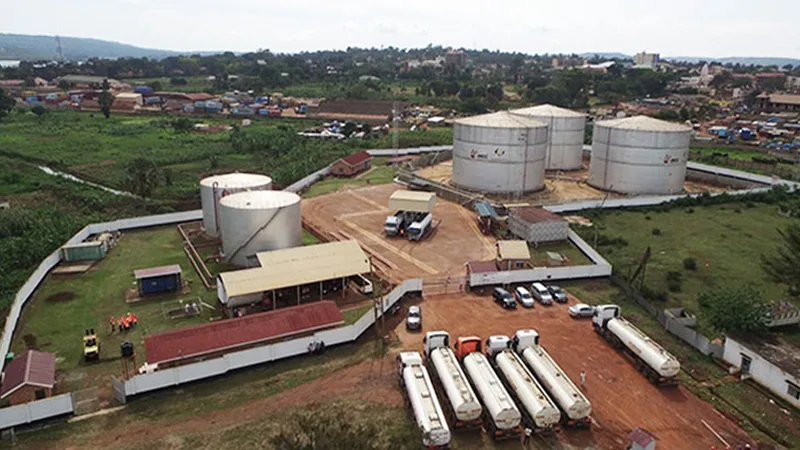
- Value addition at home: The East African Crude Oil Pipeline and the refinery project are designed to keep processing and jobs inside Uganda. We refine, we manufacture, we export finished products. This means skilled jobs for engineers, welders, technicians, and local suppliers across Bunyoro, Kyotera, and beyond.
- Infrastructure that multiplies: Revenues are being channeled into roads, energy, industrial parks, and the Parish Development Model. Oil under the ground must lift households above it. Communities near the pipeline and oil fields are already seeing new health centers, schools, water systems, and access roads.
- Patriotism as policy: Every shilling, every barrel, every contract must answer one question: does this build Uganda?
Green Oil: A Ugandan Advantage
Unlike most oil producers, Uganda’s oil is not from a desert. We have fertile land, rainfall, and forests. That is an advantage we must protect and use. Planting forests around the petroleum area and pipeline corridor is not optional. It is strategic. Trees will secure watersheds, prevent soil erosion, absorb emissions, and create a permanent green belt along national infrastructure. CSL Ali Ssekatawa has championed the vision of making a forest another force—a living, growing footprint on the environment that outlasts the project. This is patriotism in practice: we extract resources, but we also restore and leave Uganda greener than we found it.
Forty Years, One Direction
This is not about one sector. It is about one trajectory. Peace made production possible. Production makes prosperity possible. And patriotism makes it all sustainable. President Yoweri Kaguta Museveni’s 40-year rule gave Uganda the stability to find oil. The Uganda Petroleum Authority’s dedication, led by Ernest Rubondo and Ali Ssekatawa, is giving Uganda the capacity to use it well. The first drop of petrol will be more than a chemical event. It will be a statement: Uganda owns its destiny. Communities benefit. The economy grows. And the land remains. **MMJ Immanuel Ben Misagga**\ Investor and Emeritus President, Villa SC & Nyamityobora FC