I have worked with a number of professionals in the construction sector and one of the most absurd observations is their lack of growth in terms of capacity. This is mostly attributed to the lack of opportunities due to an internationally institutionalised system during bidding for work. As an investor in this industry it bothers me that Ugandans barely have any influence and they only take away crumbs from the multi-trillion-shilling deals.
Because stakes in terms of investment and experience are always raised for major works, it deprives local companies and personnel of capacity to bid. Things are further complicated by the archaic grading system of professions in the industry, which is not at par with the today's advanced technology.
Take the profession of surveying. It takes one 10 years' experience to be fully registered and certified as a professional surveyor but such regulations were made in the 60s during an era of using dumpy levels. Surveying a mere acre was a tedious process that took a whole day.
To date, surveying technology has greatly evolved with real-time high-tech systems such as total stations and Real-Time Kinematic (RTK) that do the work in minutes. This may not be a popular opinion but many of today's young graduate surveyors, using latest technology, can do a task much faster and accurately than the seniors equipped with old technology.
Capturing the required data is no longer that complex given that the machine will do most of the work as commanded by the technician. Yet in most cases, winning a major bid will require you to use the latter.
Things get trickier when bidding for big projects because oftentimes, the experienced surveyor lacks the international-level experience. In the end, a foreigner is hired to do the work but he will also end up subcontracting locals cheaply to actually do it. This is a vicious cycle that keeps Ugandan professionals at the lowest end of the construction industry.
We are still ideologically colonised and I understood this institutionalised racism a long time ago while working on various projects. My company had been contracted to work on the Nabyonga and Mugishu roads in Mbale. When the project consultant, a black man, proposed the use of more durable DR material on the roads, the funders from the World Bank rejected it.
Weeks later while working on the Kagote and Market street roads in Fort Portal, the same proposal by a foreign consultant was unanimously approved. Years down the road, the CRR material used for the Mbale roads has failed while the Fort Portal roads are strong and durable.
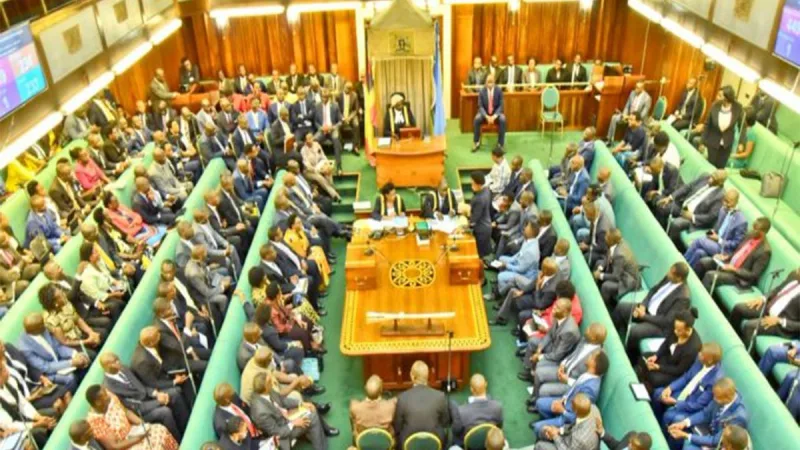
Therefore, it will take a constructive effort from local industry regulators and educators to convince Parliament to amend laws to protect Ugandans from these discriminative shackles. And we don't have to look further than to the legal profession in Uganda, which is one of the most guarded.
For one to practice in Uganda, they have to pass through the Law Development Centre for a diploma in legal practice. It doesn't matter whether you have a first-class degree in law from the UK. You have to be 'Ugandanised' about our legal profession. The profession is purely run by Ugandans. It is for that reason that international law firms are forced to find a Ugandan associate to handle their legal cases. This has allowed Ugandan firms to thrive in the profession. The construction industry can also emulate this.
So, the first obstacle to overcome are thresholds in the profession in regard to experience. Our systems need to revise such requirements for they render our surveyors unqualified and lessens the indigenous firms' competitive advantage.
Uganda is blessed with a young, hardworking educated labour force, which has successfully progressed in various engineering disciplines. However, our tendering systems have not been keen to be practical and revise the requirements in some tendering opportunities. Some employers have asked for disciplines that aren't even taught in our universities. A case in point is a Higher Diploma in Carpentry and Joinery. This is unfair to our local contractors and the only way to get such personnel on board is through the foreign contractors.
Our debate should consider this. If these discriminative issues can be urgently addressed, local contractors would no longer suffocate in their economy.