Kampala’s Traffic Crisis Is a Choice We Keep Making
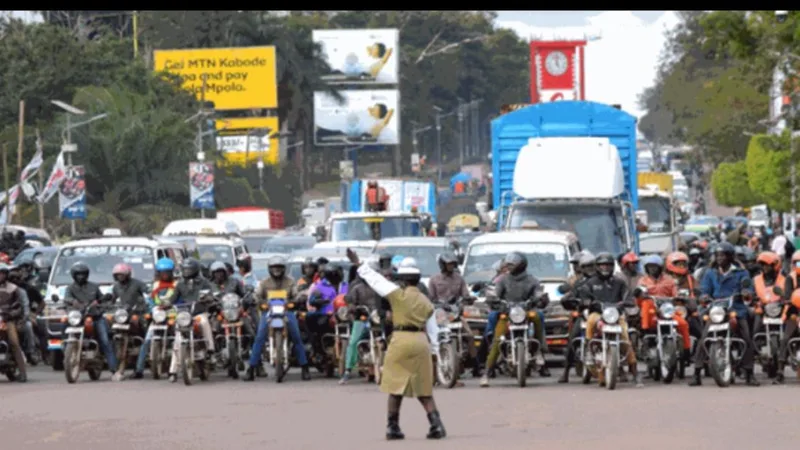
Let’s call it what it is: Kampala is a traffic time bomb, and we’re all standing around watching the fuse burn. You can feel it every morning on Jinja Road, every evening on Entebbe Road, and every hour in between on the inner streets. The city moves, but it moves like a body in convulsions. Rules exist on paper. On the ground, they evaporate the moment you hit the first junction. Boda boda riders tear down the wrong side of the road as if lane markings are suggestions. Traffic lights flash red, yellow, and green, but for too many riders and drivers, they’re just decorative lights. Pavements built for pedestrians have become express lanes for motorcycles trying to shave off 30 seconds. And when congestion chokes a junction, the people tasked with restoring order often wave cars into oncoming lanes “to reduce traffic.” That’s not traffic management. That’s organized chaos with a whistle. My Zambian and Mozambique delegations were here last month for meetings in Kampala. They couldn’t believe what they were seeing. Not because they’ve never seen traffic before. Lusaka and Maputo have their own problems. But they couldn’t believe how calmly we accept it. How we’ve normalized wrong and started calling it “the way things are done here.” One of them said to me, “In our country, this would cause a national outcry. Here, it’s Tuesday.” That’s the real danger. Not just the near-misses and the screeching brakes. It’s the fact that we’ve stopped flinching.
This Isn’t Hustle. It’s Self-Sabotage.
We love to talk about Ugandan hustle and resilience. But hustle doesn’t mean ignoring red lights. Resilience doesn’t mean treating the road as a battlefield. What we’re seeing on Kampala’s roads is neither. It’s dangerous, and it’s killing us slowly. Every time a boda weaves through pedestrians on a pavement, we tell the next generation that your time is more important than someone else’s safety. Every time a driver follows a traffic officer’s hand into oncoming traffic, we teach that rules are optional if you’re in a rush. Every time we shrug and say, “That’s Kampala for you,” we erode the standard of what we expect from ourselves and from each other. The numbers back it up. Uganda loses over 4,000 people a year to road accidents, and Kampala accounts for a huge share. The World Health Organization ranks road traffic injuries as a leading cause of death for young people in the country. Behind every statistic is a family that didn’t get to have dinner together that night. A business that lost its main breadwinner. A future that ended on the tarmac because someone decided rules didn’t apply to them. And yet, the business of broken metal is booming. It’s easier to ride in hell than to ride in Kampala city. I pray the people in the business of panel beating are lining up at the bank every day because the coffin sellers are digging our graves next to purgatory.
The Normalization of Wrong Has a Cost
What’s happening on our roads is a mirror. It shows how easily we adjust to dysfunction when it becomes routine. We see it in the small things: a rider on the pavement who gets a free pass because “he’s in a hurry.” A driver who jumps a red light and gets waved through by a boda behind him. A traffic officer who looks the other way because stopping every offender would mean the entire city grinds to a halt. Each compromise seems small. Each one makes sense in the moment. But add them up over months and years, and you get a city where wrong feels right. Where breaking the law feels like common sense. Where chaos feels like the only way to move. I’ve seen it even in my own upcountry visits. Let me keep it real: from Kifuuta, Kyotera, to Buddu. Out here, we see traffic and boda cyclists coming to the burials of Kampala accident victims from the neighboring Lwengo and Lukaya highway. People we know. Young people. Breadwinners. And the story is always the same: “He was knocked by a boda coming from the wrong side.” “She was hit on the pavement.” “The driver was avoiding traffic.” We bury them, we mourn, and then we go back to Kampala and do the same thing all over again.
We Can Do Better, But It Starts With Us
The roads won’t fix themselves. The boda industry won’t self-regulate. The police won’t suddenly enforce laws they’ve been told to ignore for the sake of traffic flow. Change starts when we refuse to pretend this is normal. It means passengers telling boda riders, “Don’t use the pavement. I’m not in that much of a hurry.” It means drivers stopping at red lights even when no one else is. It means citizens demanding that traffic officers enforce the law, not suspend it when things get busy. It means leadership treating road safety as a public health crisis, not an inconvenience. Fix the roads where they’re broken. Expand public transport so people aren’t forced onto bodas for every short trip. Enforce the law consistently, without exception for “big men” or “urgent cases.” And most importantly, change the story we tell ourselves. Wrong is wrong. Full stop. There’s no traffic situation so bad that it justifies creating a head-on collision. There’s no meeting so important that it’s worth killing someone over. There’s no “Kampala way” that should override basic human decency and common sense.
The Choice
Kampala doesn’t have to be this way. Other cities with worse congestion and fewer resources have brought order back to their streets. It took political will, consistent enforcement, and a public that decided they were done accepting chaos as normal. The fuse is still burning. We can cut it, or we can keep watching. If we choose to cut it, it starts with each of us deciding that our time isn’t worth more than someone else’s life. That our convenience isn’t worth more than a city that works. Because if we don’t, the next burial in Lwengo and Lukaya will have another name we know. And we’ll have no one to blame but ourselves for calling it normal. Wrong is wrong. Fix the roads. Enforce the law. Stop pretending chaos is a solution. *MMJ Immanuel Ben Misagga**\ *Investor, Emeritus President SC Villa, Nyamityobora FC