Ensimbi, Kwacha, Kwanza, Mbongo, Rubble, Faranga
Ahhh, my sons! My daughters! My brothers! You are asking the right question now. You want to know where this devil was born? Where did man first say, "No more goats, bring me money"?
Sit down. Put your phone on silent. Pour yourself some tea or, if you are in Kifuuta, some bushera from Walusimbi. Because this story is juicy like roasted groundnuts in Kalisizo market, sweet like ripe mango falling in Jinja, and bitter like waragi when it burns your throat.
It did not start in Uganda. It did not start in America. It started where men were tired, clever, and greedy all at the same time. Where a man looked at his goat, looked at the long road to the market, looked at the hot sun, and said, "There must be an easier way!"
And that day, my sons, the good devil was born.
MESOPOTAMIA: IRAQ OF TODAY, THE FIRST ACCOUNTANTS OF THE WORLD
Long, long ago, before Jesus, before Muhammad, before even our grand-grandfathers were born, there was a land between two rivers, the Tigris and Euphrates. Today, we call it Iraq. The land was green, the rivers were fat, and the people were clever.
The people there, the Babylonians and Sumerians, were tired of carrying goats and barley to market. Imagine you want salt; you carry a chicken on your head for three days. You want a wife; you carry ten cows through the desert. You want land; you carry goats until your legs are crying!
So they invented the shekel.
Not a coin. Not paper. A weight. A piece of silver, weighed on a stone. Shining. Cold. Heavy in the hand. If you wanted a goat, you weighed silver. If you wanted a wife, you weighed silver. If you wanted to pay a debt, you weighed silver.
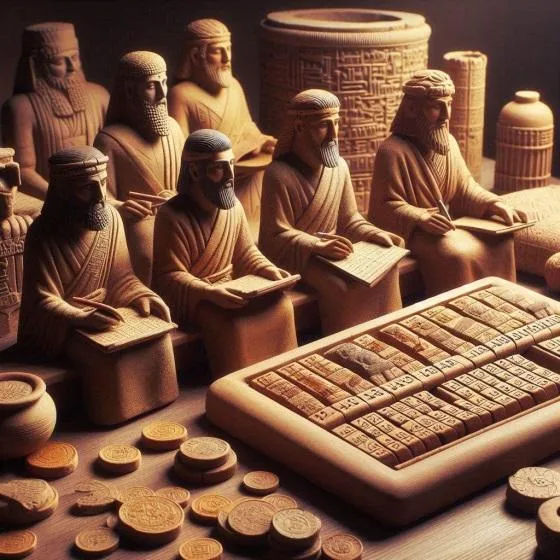
They even wrote it on clay tablets, like our first receipts! A man would go to the temple, sweating, kneeling before the priest, and say, "Priest, I owe this man 10 shekels." The priest would take wet clay, soft like posho, and press his stick inside it: click, click, click! Then he would bake it in the sun until it was hard like a brick. That was the first bank! That was the first loan! That was the first debt!
Banange! Even then, people were already borrowing money and failing to pay! Even then, a man would borrow and run away at night! Even then, a woman would cry because her husband had taken a loan and disappeared!
Nothing is new under the sun, my sons! The devil was already wearing a suit in Mesopotamia!
LYDIA, TURKEY OF TODAY: WHERE THE FIRST COIN WAS BORN
Now, this one is sweet. Very sweet. Like sugar cane in Kakira or Lugazi Kawoolo.
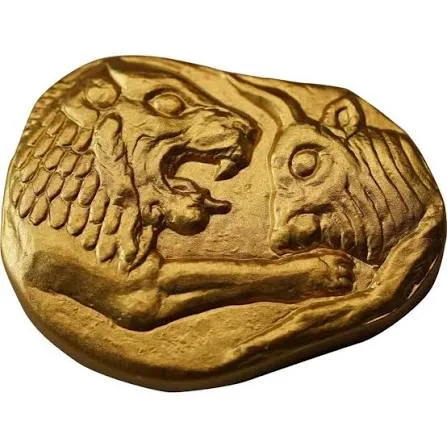
In a small kingdom called Lydia, in what is today Turkey, there was a king called Croesus. That man was so rich that even today, white people say, "Rich as Croesus!" When he walked, his clothes jingled with gold. When he sneezed, gold dust came out!
Around 600 years before Jesus, the Lydians said, "Why are we weighing silver every time, like we are weighing posho in the market? Why are we carrying scales everywhere? Let us make small pieces, stamp the king's lion on them, and let everybody trust them."
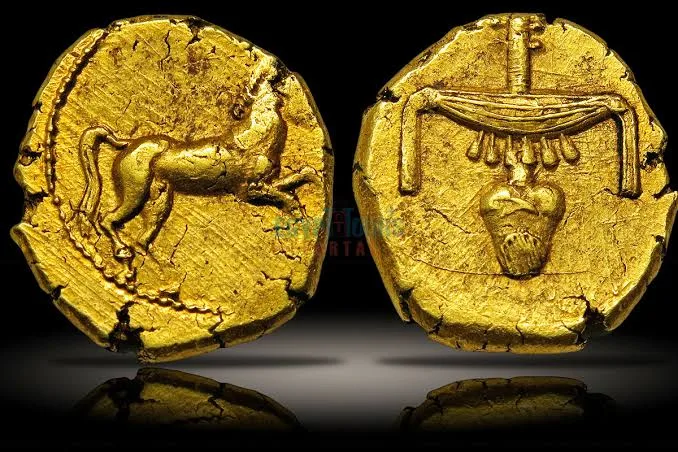
And boom! The first real COIN was born. Gold and silver mixed, stamped with a lion roaring, proud and fearless. Small like a fingernail, but powerful like a gun. You could hold a whole cow in your pocket!
From that day, a man could put money in his pocket and walk to the market, whistling, chest out. He didn't need a cow. He didn't need a goat. He just needed coins that jingled, ching, ching, ching, like music in his pocket!
That is where the trouble started, my sons. Oh, that is where the devil learned to hide!
Because when money became small, greed became big. A man could now hide money in his pocket, in his house, under his bed, inside his mattress, inside his shoe. Before, you could not hide 100 goats. Everybody would see them, everybody would hear them: mee, mee, mee, all the way from Kyotera! But you can hide 100 coins and smile like an angel, while your heart is black like charcoal!
From Lydia, the world learned to smile with money in the pocket and lie with the mouth.
CHINA, THE LAND THAT INVENTED PAPER MONEY
Now, China, banange! China is clever! China is too clever! Basajja bagezi!
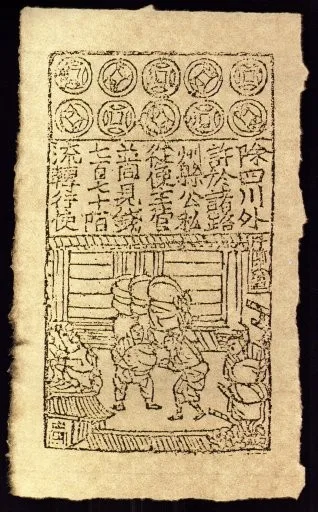
While the rest of the world was still carrying heavy coins like stones, like they were carrying bricks to build a house, the Chinese said, "We are tired of carrying iron coins. Our pockets are tearing! Our belts are breaking! Our horses are tired!"
So, in the Tang Dynasty, almost 1,000 years ago, they invented PAPER MONEY. They called it "Flying Money" because it flew from hand to hand, light like a leaf, soft like a woman's handkerchief.
Marco Polo, the white traveller, went to China and saw it, and his mouth opened like a fish! His eyes became big like saucepans! He ran back to Europe shouting, "Those Chinese are using paper to buy gold! Paper to buy rice! Paper to buy houses! Paper to buy wives!"
The Europeans laughed at him. They thought he was mad. They thought he had eaten too much opium. They said, "Paper? How can paper buy a cow? Are you dreaming?"
But today, the whole world is using paper. Even your phone, M-Pesa, Airtel Money, is just paper that has become air! You press a button, and money flies from Kampala to Kifuuta in one second. No goat. No coin. Just air!
China taught the world the biggest secret: Money is not the paper. Money is not the coin. Money is the TRUST behind the paper. If people trust it, even a piece of paper can buy a house. If people lose trust, even gold becomes useless like a stone on the roadside.
ROME, ITALY OF TODAY: MONEY BECAME AN ARMY
Rome! The empire of soldiers. The empire of iron and blood.
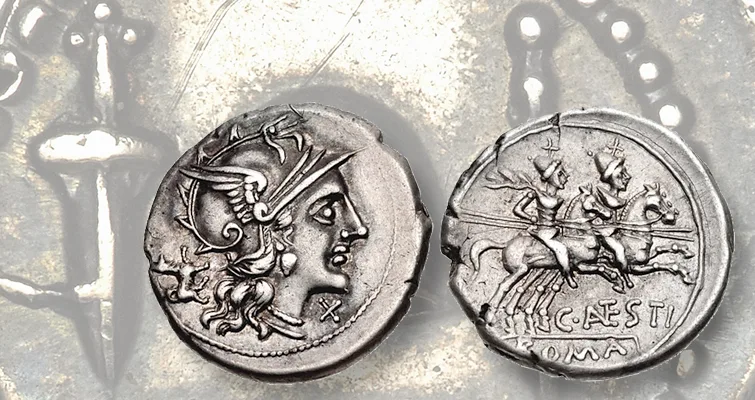
The Romans invented the denarius, a silver coin with Caesar's face on it. Caesar's face was proud, his nose was sharp, and his eyes were looking at you like he owned you. And he did! Because if you had his coin, you had his power.
And they used money to conquer the world. They paid soldiers with money. They paid spies with money. They bought land with money. They bought chiefs with money. They even paid Jesus' betrayer, Judas, with 30 pieces of silver! 30 pieces! Just 30 small coins, and a man's soul was sold in one night!
That is where you see it clearly, my sons: money can buy loyalty, and money can buy betrayal. In the same coin. In the same night. In the same hand.
One man uses money to feed his children. Another man uses the same money to sell his brother. Same money. Different heart.
Rome fell not because it had no money. Rome fell because money made the leaders mad. They started printing, stealing, and loving money more than their own people. They ate like kings while the poor ate like dogs. And the empire collapsed like a house built on sand. Boom! In one night, mighty Rome became dust.
Money without character is like a big house without a foundation. It will fall. It must fall.
EGYPT, THE LAND OF PHARAOHS: MONEY WAS GRAIN AND GOLD
In Egypt, before coins, they used grain. Wheat was money. Beer was money. Imagine working the whole day under the hot sun, building a pyramid as big as a mountain, carrying stones until your back breaks, and when evening comes, your salary is beer and bread! You go home drunk and full, but you have no money to buy a shirt!
Later, they used gold, gold from Nubia, from Sudan, from our Africa. Black hands digging gold for Pharaoh. Pharaoh was so rich in gold, his tomb was shining like the sun. His mask was gold. His chair was gold. His bed was gold. Even his toilet was gold!
But even Pharaoh died and left his gold in the ground. Money stayed. Man went. The gold is still in the museum today, cold and lonely. Pharaoh is gone. His name is on a stone. His money could not buy him one more breath.
My sons, if Pharaoh could not carry his gold to heaven, what makes you think you will carry your money to heaven? You will leave it here. All of it. Your house, your car, your land. You will leave it for people who will fight over it before your body is even cold.
AFRICA, OUR OWN MOTHER: WE USED COWRIE, ENSIMBI SHELLS, SALT, AND IRON
Don't think money started only with white people! No! Banange, don't insult our ancestors! Jjaajja Muguluma was a bank in Buddu. Everyone kept his Ensimbi at his palace, Embugga. Africa had money before Europe knew how to write!
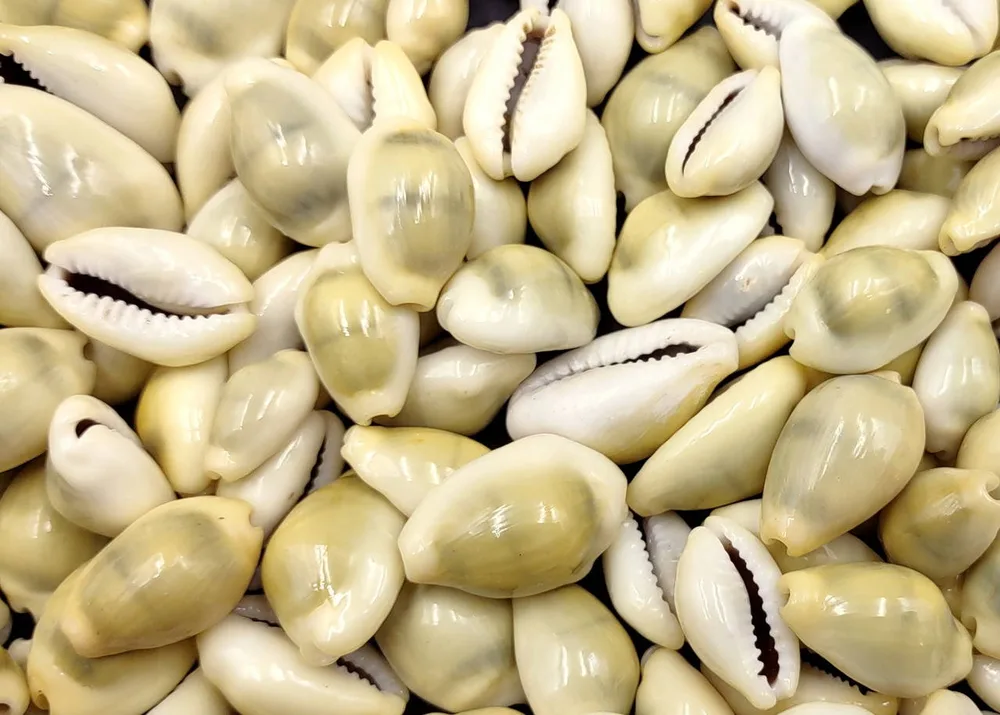
In Uganda, in Buganda, Kyotera, Buddu, Bunyoro, and Busoga, our Jjaajjas used cowrie shells, Ensimbi, those small white shells from the Indian Ocean. Beautiful like women's eyes. Smooth like a baby's skin. One shell could buy a chicken. A basket of shells could buy a wife! A man would come with a sack of shells on his back, sweating, and the father of the girl would say, "My daughter is worth 1,000 shells!" And the bargaining would start like music!
In West Africa, in Mali and Ghana, they used GOLD DUST. Mansa Musa, the King of Mali, was the richest man who ever lived on earth! Listen: when he went to Mecca, he carried so much gold that he broke the economy of Egypt! He gave away gold like groundnuts! He gave to beggars, he gave to kings, he gave to children on the road. Prices fell for 10 years because of him! Gold became cheap like water! People in Egypt were crying because Mansa Musa had spoiled their market with too much generosity!
In the Sahara, they used SALT. Yes, salt! A block of salt was worth more than gold. Because without salt, meat rots, food has no taste, and man dies. Men crossed the desert for 40 days, with camels dying and tongues dry like bark, just to bring salt. Salt was life. Salt was money. Salt was God, as the gods of Kifuuta kept the Nsimbi.
In Congo, they used Faranga, and in our villages, Mbongo, iron, beads, and bark cloth.
So, when you say "Faranga" and "Mbongo" today, you are speaking the language of our ancestors. Money did not come from London. Money lived here too. Money was born in Africa, in our mother's womb: Ensimbi!
ENGLAND: WHERE THE POUND BECAME KING
And then England came with the Pound. One Pound meant one pound of silver. Heavy. Strong. Serious like a British soldier. They made the whole world use the Pound. If you wanted to trade, you had to speak Pound.
Then America came with the Dollar. Dollar came from "Thaler", a German coin. Today, the Dollar rules the world like a new king. The Dollar sits on the throne, wearing a green coat, smiling. Everybody wants Dollar. Everybody bows to Dollar.
But remember, my son, kings come and kings go. Today, it's Dollar. Tomorrow, it may be Yuan from China. Or it may be Bitcoin on your phone. Or it may be something your grandchildren will invent that we cannot even imagine. A money that has no paper, no coin, no pocket, just light!
Money keeps changing its dress. Like a woman changing her gomesi. Today she wears red; tomorrow, she wears blue. But its heart never changes. Its heart is still the same: it can make you, it can break you.
So, what have we learnt from all these countries?
Mesopotamia taught us: money started as TRUST. If there is no trust, there is no money.
Lydia taught us: money became SMALL, so greed became BIG. When you can hide it, you can lie about it.
China taught us: money is only PAPER if people believe it. Belief is the real money.
Rome taught us: money can buy loyalty and betrayal in the same night. Same coin, different heart.
Egypt taught us: even Pharaoh left his gold behind. You will leave yours too.
Africa in Kifuuta Katooke taught us: we had money before we had colonizers. We are not poor in history. We are rich in history.
England and America taught us: whoever controls money controls the world for a season. But seasons change.
The Kifuuta Oracle teaches you the final lesson, the one they don't teach in school, the one they don't teach in a bank:
Money was invented by man to make life easy. But man has made money to make life hard.
Don't be a slave of a thing your ancestors invented with their own hands. Don't kneel before a paper that you made. Don't sell your soul for a coin that will rust.
Use money like you use a panga: to cut, to build, to clear the bush. Don't let the panga cut you. Hold it by the handle, not by the blade.
Money can make you. Money can break you. The choice is not in the money. The choice is in YOUR hand. In YOUR heart. In YOUR character.
Cross the zebra cross wisely, my sons. Look left. Look right. Look again. Don't run like a mad man after the good devil. Walk like a king. Walk like an Oracle. Walk like a man who knows that money is his servant, not his master.
The Kifuuta Oracle has spoken. I have seen it all.